

WeGreened Approval Statistics: Week of July 14, 2025
WeGreened Weekly Approval Summary
Week of July 14, 2025
During this week, WeGreened received a total of 89 approval notices from the United States Citizenship and Immigration Services (USCIS). As in prior weeks, the EB-2 NIW (National Interest Waiver) category continued to lead in volume, constituting over 68% of total approvals. The EB-1A (Alien of Extraordinary Ability) category also remained strong, especially among researchers with notable scientific credentials. EB1B and O1A filings showed smaller but impactful representation.
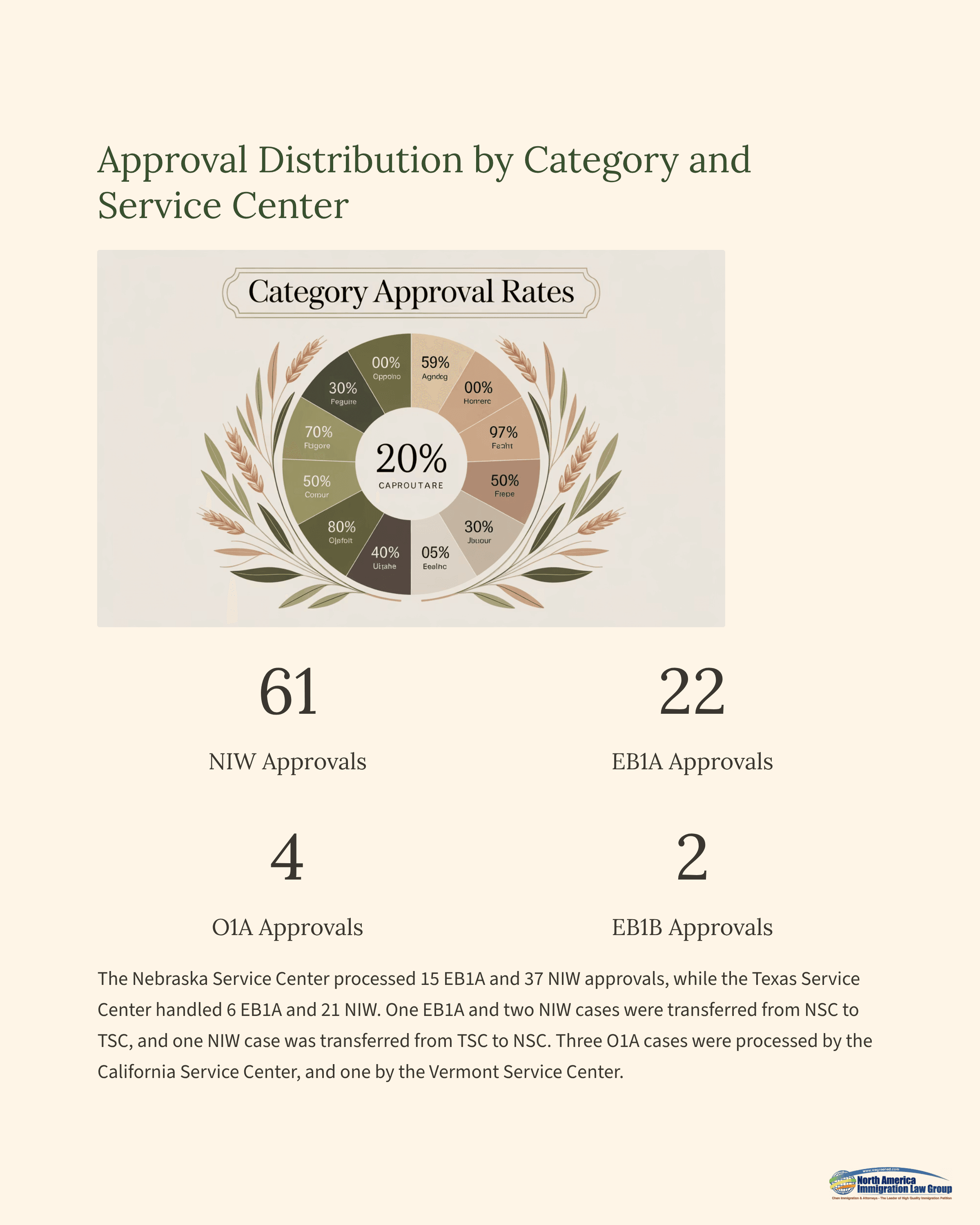
Approval Distribution by Category and Service Center
Of the 89 approvals, 61 were for NIW, 22 for EB1A, 2 for EB1B (Outstanding Professors or Researchers), and 4 for O1A (Individuals with Extraordinary Ability or Achievement). The Nebraska Service Center processed 15 EB1A and 37 NIW approvals, while the Texas Service Center handled 6 EB1A and 21 NIW. One EB1A and two NIW cases were transferred from NSC to TSC, and one NIW case was transferred from TSC to NSC. Three O1A cases were processed by the California Service Center, and one by the Vermont Service Center.
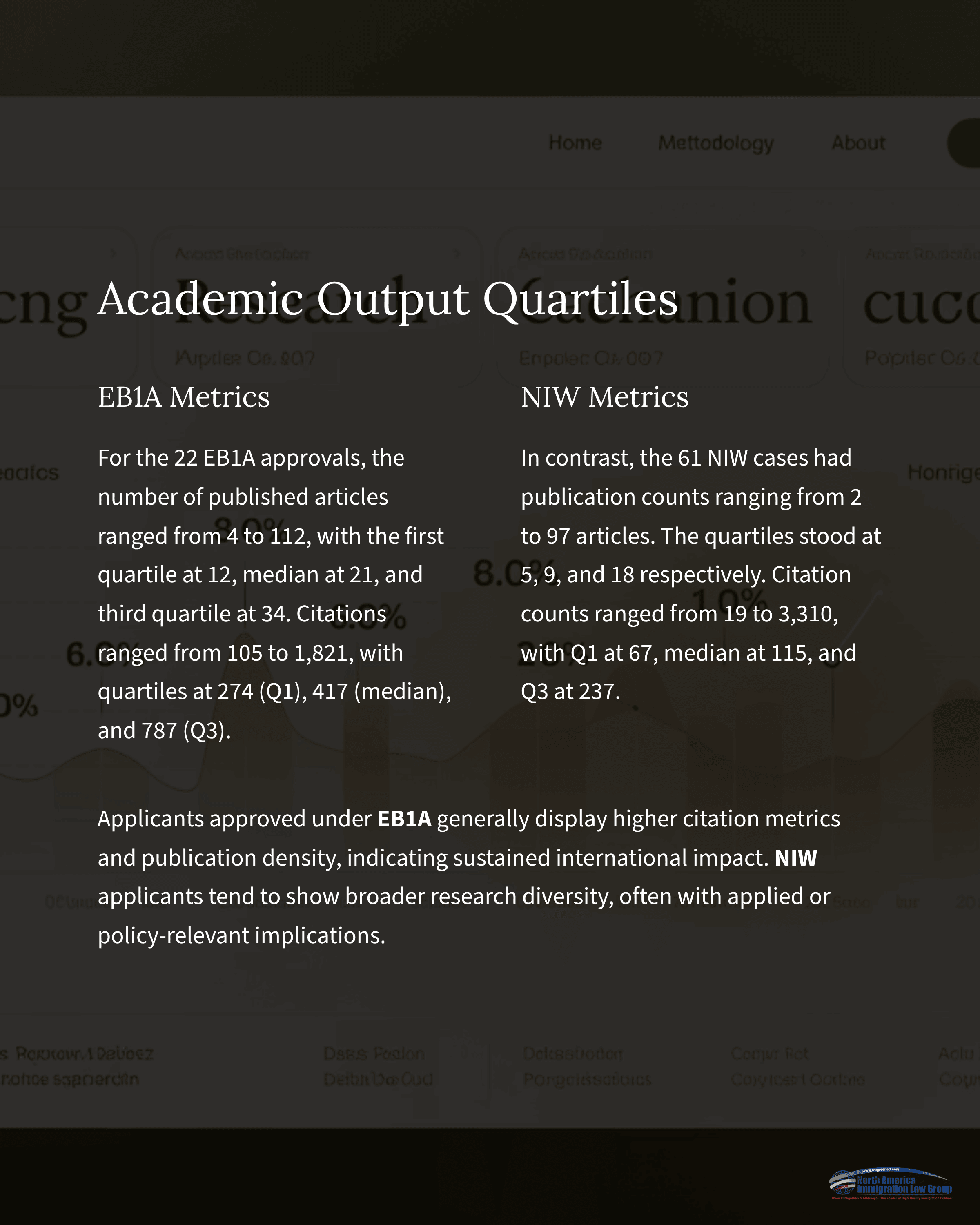
Academic Output Quartiles
For the 22 EB1A approvals, the number of published articles ranged from 4 to 112, with the first quartile at 12, median at 21, and third quartile at 34. Citations ranged from 105 to 1,821, with quartiles at 274 (Q1), 417 (median), and 787 (Q3).
In contrast, the 61 NIW cases had publication counts ranging from 2 to 97 articles. The quartiles stood at 5, 9, and 18 respectively. Citation counts ranged from 19 to 3,310, with Q1 at 67, median at 115, and Q3 at 237.
Applicants approved under EB1A generally display higher citation metrics and publication density, indicating sustained international impact. NIW applicants tend to show broader research diversity, often with applied or policy-relevant implications.
Applicant Backgrounds and Research Fields
EB1A candidates largely came from advanced fields such as artificial intelligence, environmental engineering, quantitative research, and biomedical sciences. Many were affiliated with leading academic or research institutions, often holding fellowships, senior researcher roles, or doctoral-level positions.
NIW approvals highlighted applicants involved in critical infrastructure, data science, policy analysis, structural engineering, sustainable agriculture, and health policy. These profiles frequently emphasized how their work addresses national interest objectives like energy efficiency, economic resilience, or public welfare.
Case Highlight: Cross-Border Medicine & Modest Metrics
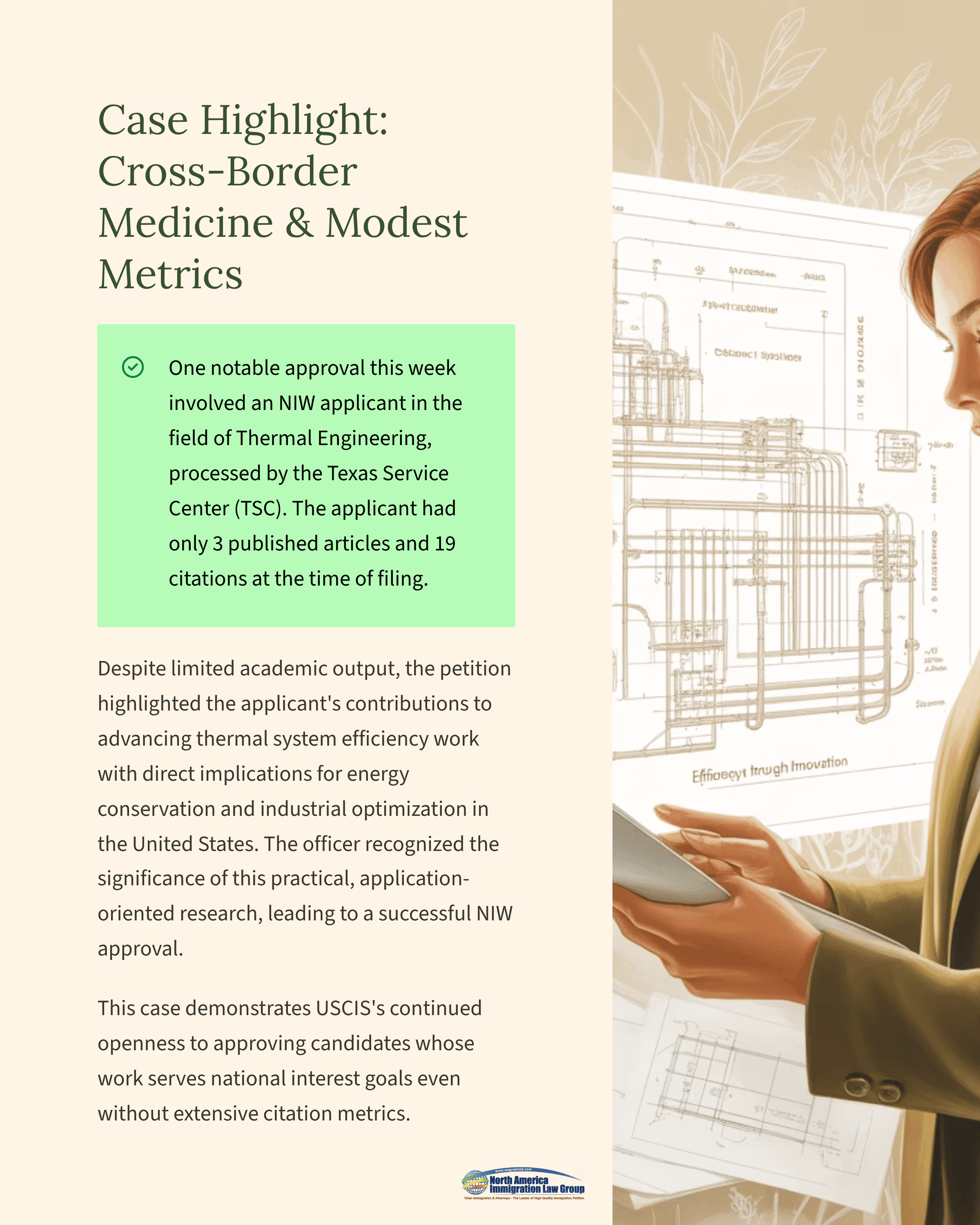
One notable approval this week involved an NIW applicant in the field of Thermal Engineering, processed by the Texas Service Center (TSC). The applicant had only 3 published articles and 19 citations at the time of filing. Despite limited academic output, the petition highlighted the applicant’s contributions to advancing thermal system efficiency work with direct implications for energy conservation and industrial optimization in the United States. The officer recognized the significance of this practical, application-oriented research, leading to a successful NIW approval. This case demonstrates USCIS’s continued openness to approving candidates whose work serves national interest goals even without extensive citation metrics.
Adjudication Trends and Observations
EB1A officers continue emphasizing global recognition, peer-review service, impactful authorship, and significant field contribution.
NIW reviewers appear increasingly receptive to interdisciplinary applicants, particularly those addressing policy, infrastructure, or regulatory challenges.
Applicants with balanced academic metrics and strong real-world relevance continue to find success across both EB1A and NIW pathways.