
WeGreened Approval Statistics: Week of October 20 , 2025
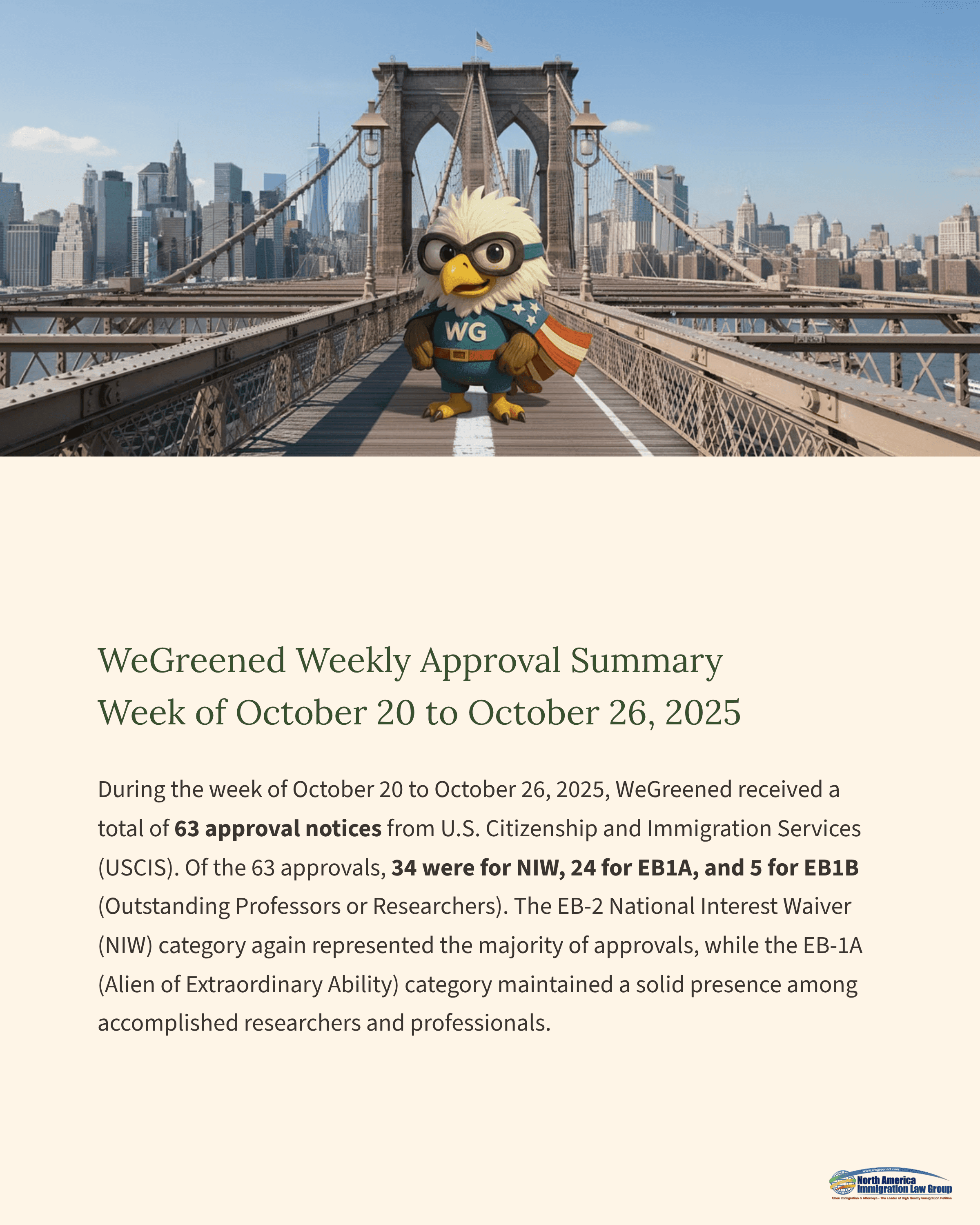
During the week of October 20 to October 26, 2025, WeGreened received a total of 63 approval notices from U.S. Citizenship and Immigration Services (USCIS). Of the 63 approvals, 34 were for NIW, 24 for EB1A, and 5 for EB1B (Outstanding Professors or Researchers). The EB-2 National Interest Waiver (NIW) category again represented the majority of approvals, while the EB-1A (Alien of Extraordinary Ability) category maintained a solid presence among accomplished researchers and professionals.
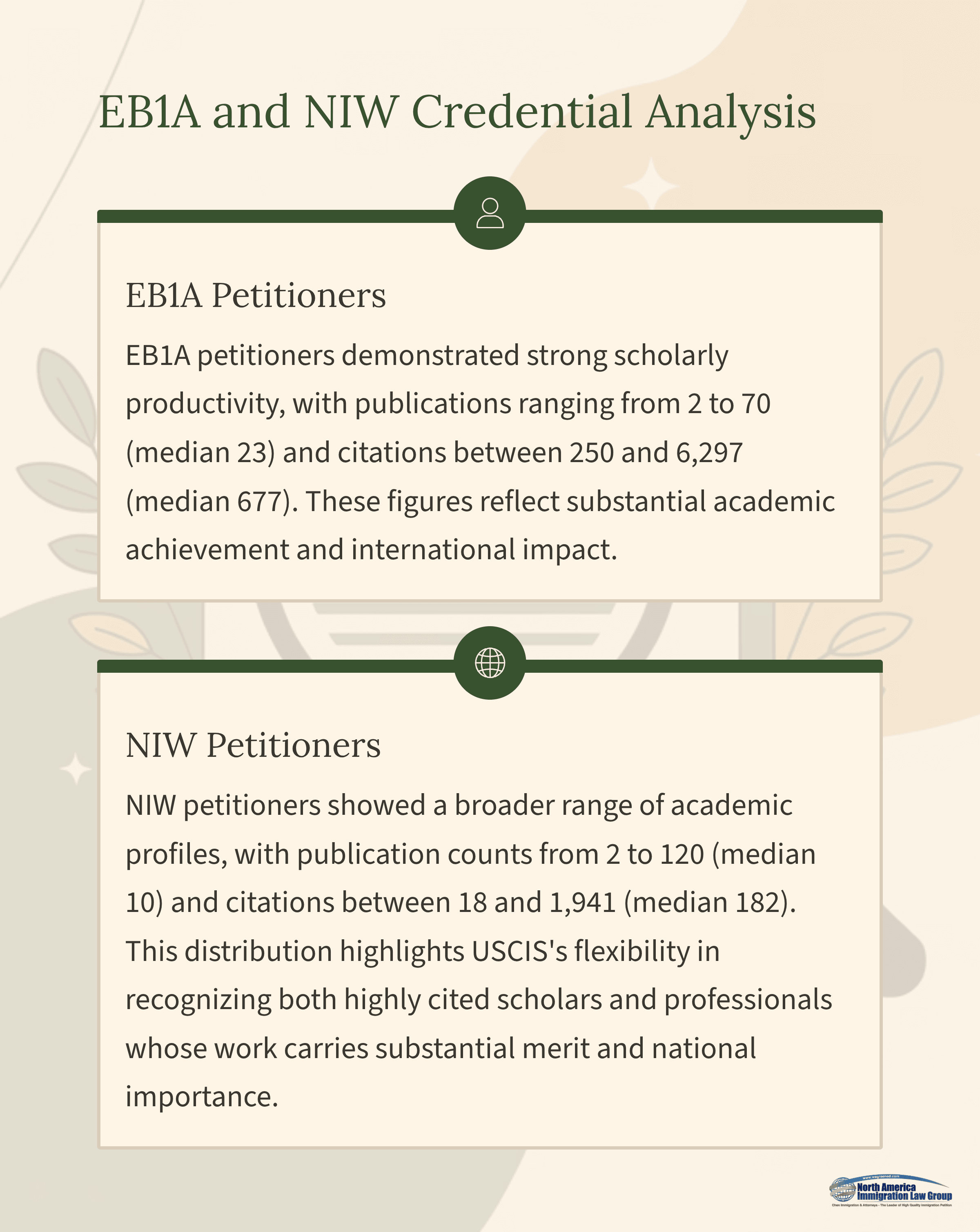
EB1A and NIW Credential Analysis
EB1A petitioners demonstrated strong scholarly productivity, with publications ranging from 2 to 70 (median 23) and citations between 250 and 6,297 (median 677). These figures reflect substantial academic achievement and international impact.
NIW petitioners showed a broader range of academic profiles, with publication counts from 2 to 120 (median 10) and citations between 18 and 1,941 (median 182). This distribution highlights USCIS’s flexibility in recognizing both highly cited scholars and professionals whose work carries substantial merit and national importance.
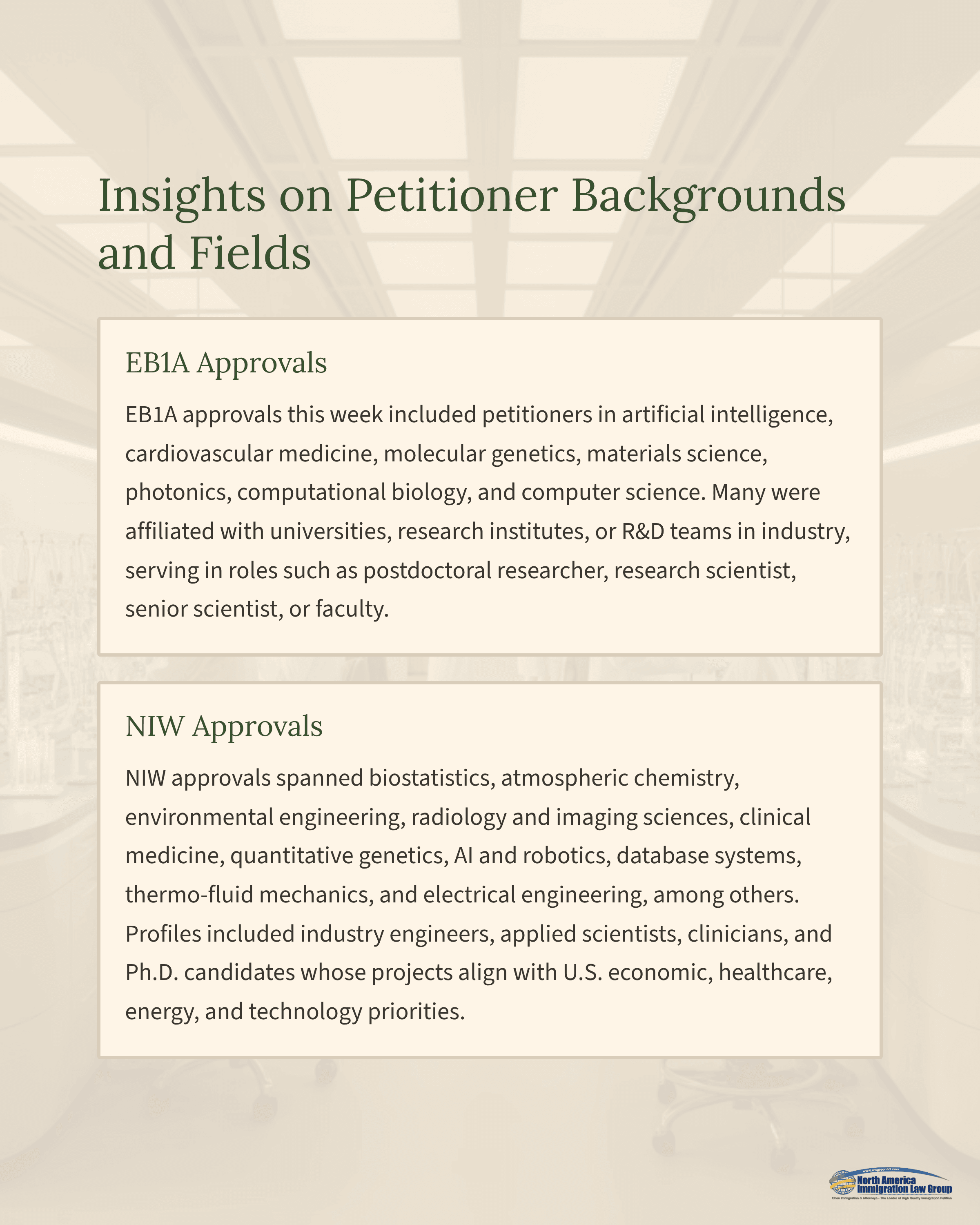
Insights on Petitioner Backgrounds and Fields
EB1A approvals this week included petitioners in artificial intelligence, cardiovascular medicine, molecular genetics, materials science, photonics, computational biology, and computer science. Many were affiliated with universities, research institutes, or R&D teams in industry, serving in roles such as postdoctoral researcher, research scientist, senior scientist, or faculty.
NIW approvals spanned biostatistics, atmospheric chemistry, environmental engineering, radiology and imaging sciences, clinical medicine, quantitative genetics, AI and robotics, database systems, thermo-fluid mechanics, and electrical engineering, among others. Profiles included industry engineers, applied scientists, clinicians, and Ph.D. candidates whose projects align with U.S. economic, healthcare, energy, and technology priorities.
Highlighted Fastest-Approval Case
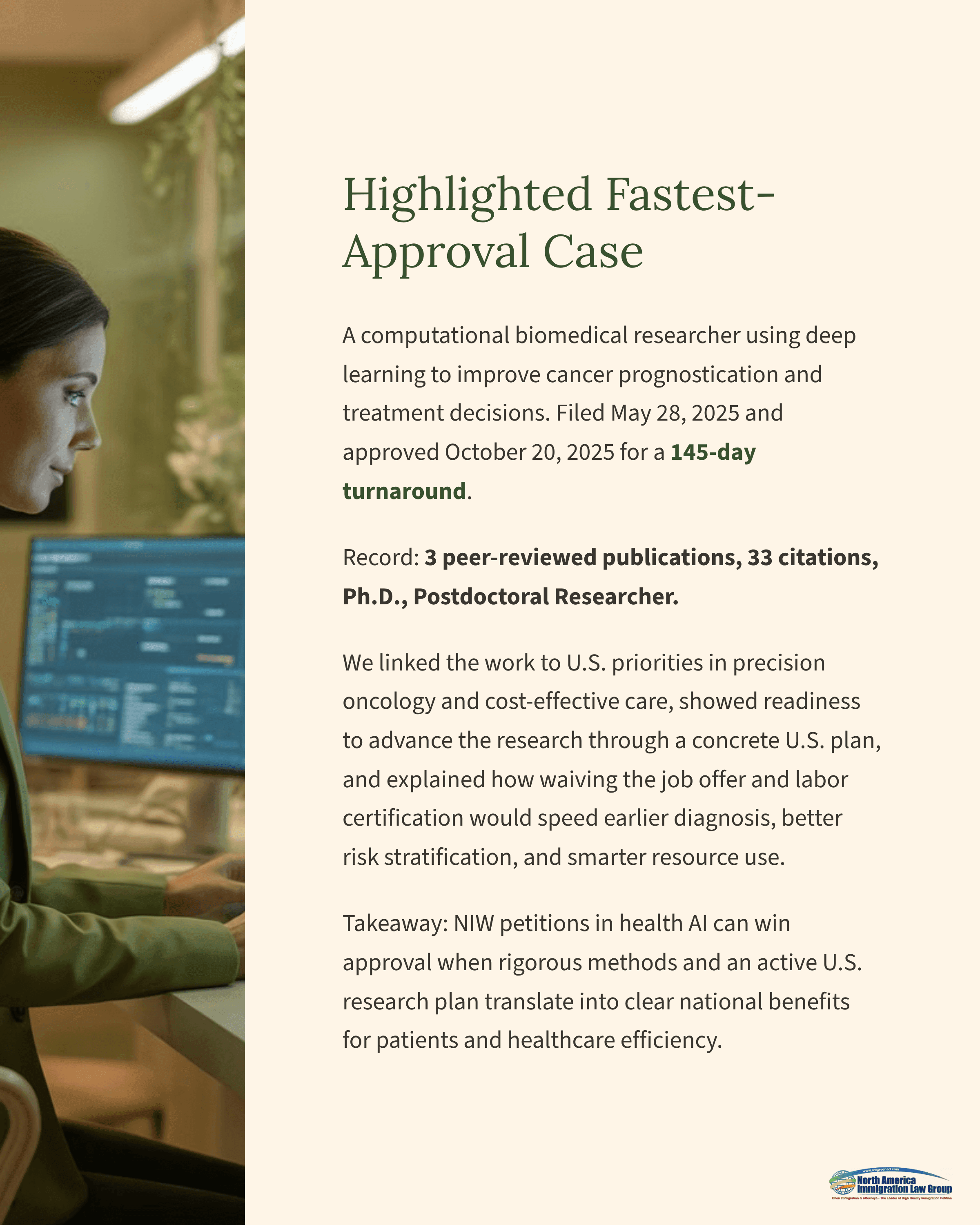
One notable NIW case this week came from computational biomedical research focused on developing advanced deep-learning methods to improve cancer prognostication and treatment decision-making. The petition was filed without premium processing on May 28, 2025 and approved on October 20, 2025, for a 145-day turnaround. The record included 3 peer-reviewed publications and 33 citations, with a Ph.D. and current employment as a Postdoctoral Researcher.
Our filing presented a clear, results-oriented narrative: first, we established substantial merit and national importance by linking the work to U.S. healthcare priorities in precision oncology and cost-effective care; second, we showed the petitioner is well positioned to advance the endeavor through doctoral training in quantitative methods, demonstrated publication impact, and a forward-looking U.S. research plan on multimodal survival prediction and pathology pattern classification; third, we explained how waiving the job offer and labor certification would accelerate tools that support earlier diagnosis, more accurate risk stratification, and better allocation of healthcare resources.
This outcome underscores that NIW petitions in health-AI can achieve approval when the record connects rigorous methodology and an active U.S. research plan to concrete national benefits in patient outcomes and healthcare system efficiency.
Adjudication Trends and Policy Observations
EB1A: USCIS continues to focus on sustained acclaim, significant original contributions, and leadership in the field. Clear, criterion-by-criterion documentation tied to field-wide impact remains essential.
NIW: Officers remain receptive to diverse academic and industry profiles when the record shows substantial merit, national importance, and that the petitioner is well positioned to advance the proposed endeavor.
This week’s results reaffirm that petitioners who connect their work to U.S. priorities and present a credible plan to move that work forward are well positioned for success.